 404-800-6700
Restaurant value is not being shaped by headlines. It is being shaped by discipline. This week with We Sell Resturants, we focused on the structural decisions that reduce risk, improve predictability, and strengthen buyer confidence. The operators gaining traction in today’s market are not chasing noise. They are building durable systems.
The common thread across markets is control. Control over systems. Control over space. Control over labor stability. Operators making intentional structural improvements are strengthening both performance and buyer confidence.
Structural Improvements That Strengthen Value
Smart Equipment and Remote Monitoring
Restaurant equipment is evolving from static infrastructure to connected systems. Modern fryers, refrigeration units, and HVAC systems now integrate with monitoring platforms that track temperature fluctuations, energy usage, and preventative maintenance indicators in real time.
Instead of discovering a failed cooler during peak dinner service, managers receive alerts days in advance. That proactive approach reduces emergency repair costs, limits product loss, and minimizes operational disruption.
From a transaction standpoint, documented maintenance history lowers perceived capital expense risk during due diligence. When buyers see consistent monitoring and preventative care, it supports confidence in the physical assets and stabilizes valuation conversations.
Hybrid Service Models Within Existing Space
Revenue growth is increasingly happening without expanding square footage. Operators are rethinking their current footprint to drive higher revenue per square foot.
We are seeing dining rooms redesigned to include pickup only counters, curbside staging areas, and digital order shelving integrated into existing layouts. No new lease. No construction delays. Just smarter space utilization.
Buyers and lenders evaluate rent to sales ratios carefully. When revenue increases inside the same footprint, occupancy costs improve relative to performance. That signals operational discipline rather than reactive expansion.
Cross Training as a Stability Strategy
Labor continues to challenge the industry, but structured cross training is emerging as a strategic solution. Instead of isolating employees into single roles, operators are training team members across multiple stations.
This reduces scheduling pressure, lowers overtime exposure, and creates internal coverage when someone calls out. It also improves retention, as employees gain new skills and see opportunity within the organization.
From a buyer’s perspective, cross trained teams reduce key person dependency. Businesses that operate independently of one critical employee transition more smoothly and are easier to finance.
Technology and Hospitality in 2026
Technology adoption is deepening, but not always in visible ways.
Agentic AI systems are now working in the background to identify overscheduled labor before the week begins, highlight over ordering patterns before they impact the P&L, and surface maintenance alerts early. These tools allow the operation to function on documented systems rather than constant owner oversight.
That matters in a sale. Buyers and lenders prefer businesses where decision making is embedded into process, not dependent on a single individual.
At the same time, the industry is experiencing what many analysts are calling a hospitality comeback. Guests are actively gravitating toward experiences that feel intentional and personal. The restaurants commanding stronger offers are those using technology to enhance service, not replace it.
During site visits, buyers evaluate more than financial statements. They observe culture, guest engagement, and consistency of experience. Financial performance tells the history. Hospitality culture signals the future.
Top Listings This Week
This week’s featured opportunities represent distinct entry points into restaurant ownership across Georgia, Florida, and Texas.
Listing #35447 – Atlanta, Georgia
Represented by Nick Pourhassan and listed at $345,000, this independent café in West Midtown generates more than $470,000 in annual sales. The 1,249 square foot location carries all in rent of $5,199 including CAM, taxes, and insurance.
While not currently operating at peak profitability, the opportunity lies in labor oversight and cost management. A hands on owner operator can focus on purchasing controls and scheduling discipline to strengthen margins. Assumable debt also creates an accessible pathway for qualified buyers.
Listing #35489 – Naples, Florida
Represented by David Whitcomb and listed at $450,000, this sandwich shop reports approximately $500,000 in sales with documented Owner Benefit of $200,000.
The 1,396 square foot space operates with manageable hours and lean staffing. Rent is approximately $4,400 including CAM, with a lease secured through June 2027 plus two five year options. A beer and wine license supports ticket growth, and catering provides additional upside. The documented earnings and structured operation make this a stable acquisition profile.
Listing #35488 – Frisco, Texas
Represented by Jason Kullman and listed at $199,000, this pizza restaurant is a fully built out second generation space on highly visible FM 423.
The 1,784 square foot location seats 48 inside with 16 patio seats. Rent is $8,104 including CAM, with a lease through April 2028 and one five year option. The kitchen infrastructure includes an 18 foot hood system, Hobart mixer, pizza oven, walk in cooler, and complete prep line. Recreating this buildout today would exceed the purchase price, making it a value driven opportunity.
Financing Changes Impacting Buyers and Sellers
As of March 1, SBA loans are available only to businesses that are 100 percent owned by U.S. citizens or U.S. nationals. Green card holders no longer qualify for SBA backed financing.
Because SBA lending has historically supported a significant portion of restaurant transactions through lower down payments and longer amortizations, this change affects the composition of the buyer pool.
For sellers, this reinforces the importance of preparation and understanding how financing structures influence qualified demand. For buyers, it underscores the need to evaluate financing eligibility before committing to a deal. Conventional lending and seller financing are viable alternatives, but they require early planning.
Digital Ordering Evolution
Ordering channels continue to evolve. Platforms such as ChatGPT are introducing direct ordering capabilities that allow guests to place orders within the interface.
When evaluating an acquisition, buyers should examine whether the POS and online ordering systems can integrate with emerging platforms. Infrastructure readiness can provide a competitive advantage. Retrofitting under new ownership introduces cost and delay that should be factored into negotiations.
Featured Sold Restaurants
Two recent transactions illustrate the importance of alignment and structured execution.
listing #25922.
In Overland Park, Kansas, represented by Tony Miceli, a seasoned multi unit operator chose to exit due to the challenges of remote management. The buyers, experienced operators local to Kansas City, bring hands on leadership and proximity to the market. The transition shifted from remote oversight to local engagement.
listing #25245
In Charlotte, North Carolina, represented by Preston Scotto, the founder of Water Bean Coffee strategically redeployed resources when a location proved better suited for a different concept. The buyers, founders of Palm Berries, identified strong demographic alignment in Ballantyne and executed a focused acquisition strategy. Clear seller motivation and structured buyer positioning supported a smooth closing.
Hot New Listings
In Saratoga Springs, Utah, Listing #35556 offers a Tier 1 QSR sub franchise reporting sales of $1,350,208. The 1,983 square foot location operates with a trained team of 14 and carries a lease through December 2035 at $10,605 per month. Royalty is 6 percent with a 5 percent marketing fee. Qualified buyers may access unsecured lending up to $500,000.
In Colorado Springs, Colorado, Listing #35337 presents a turnkey second generation restaurant with sales of $627,767. The 2,200 square foot space features dual hood systems and a lease secured through December 31, 2030 at approximately $8,466 NNN. Strong infrastructure allows for rapid concept launch without extended construction timelines.
Client Reflections
Behind every successful restaurant sale is preparation, strategy, and steady communication. Clients often remember not just the closing, but how supported and confident they felt throughout the process.
Jesica Llana – Nashville, Tennessee
Jesica worked with Certified Restaurant Broker Taylor Clemmer and shared:
“Taylor listed our restaurant taking the hassle and headache out of marketing and advertising. The pictures were great and we got to showcase our restaurant to a wider list of potential buyers than we could have shown on our own.”
Her feedback highlights the power of professional marketing and national buyer reach. Expanding exposure beyond what an individual owner can generate alone often creates stronger interest and better outcomes.
Becky Devery – Pensacola, Florida and Mobile, Alabama
Becky shared her experience working with Certified Restaurant Broker Jay:
“Jay worked diligently to help sell our restaurant. He worked and guided us through every step until it was sold. I will recommend that if you are thinking of selling your business to contact him. Thank you Jay!!”
Guidance and follow through are essential in a restaurant transaction. From listing to closing, structured execution brings clarity and confidence to one of the most important financial decisions an owner will make.
Across markets, the consistent theme is expertise, responsiveness, and a disciplined process that delivers results.
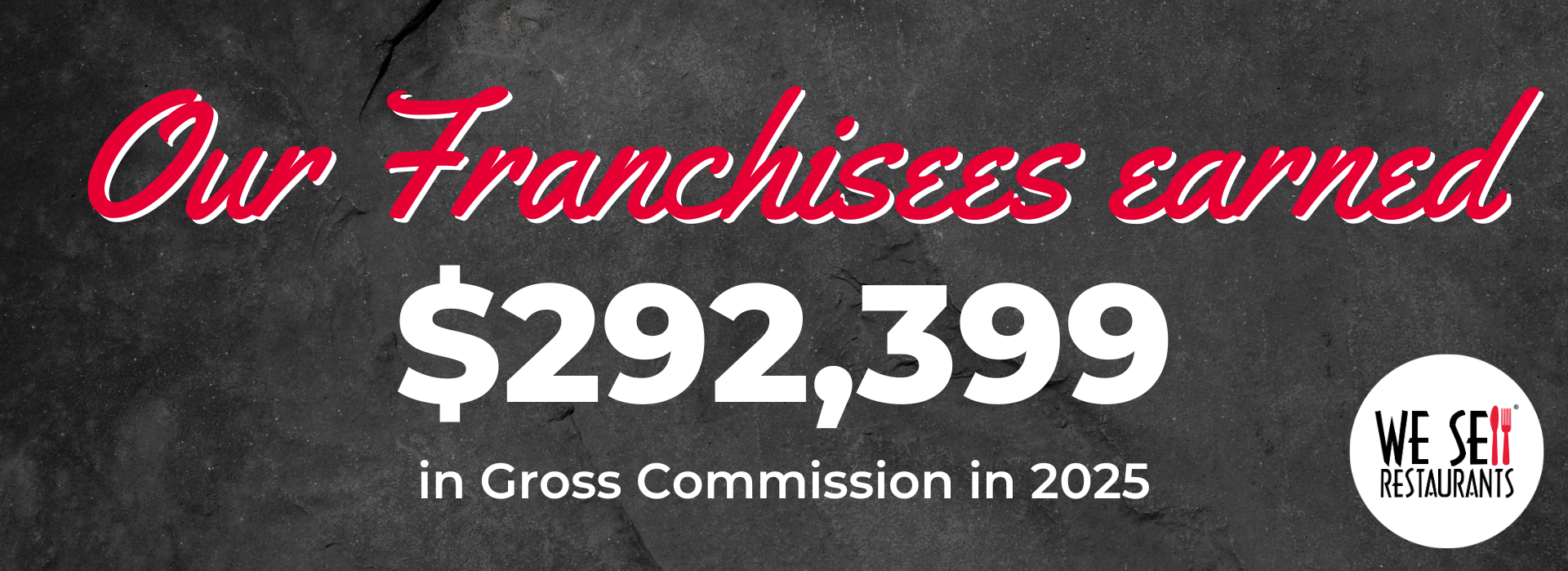
Franchise Opportunity: A Different Way to Lead in the Restaurant Industry
Restaurant ownership transitions are accelerating across the country. Thousands of operators will exit over the next decade, and every transition requires valuation expertise, buyer qualification, and structured negotiation.
Our franchise partners operate exclusively in restaurant brokerage. Instead of managing shifts and food cost, they manage transactions. They work with owners, franchise brands, landlords, lenders, and attorneys to guide deals from listing to closing.
With proven valuation models, national marketing reach, and proprietary systems, our franchisees build authority in their markets while helping restaurant owners navigate one of the most important financial decisions of their careers.
If you understand restaurants and are ready to lead at a higher level, this may be your next chapter.
Franchise Resales: Why Secondary Market Strength Matters
For franchise brands, resale activity is more than a transaction. It is a signal of system health.
Buyers evaluating franchise resales look beyond unit level profit and loss. They assess how responsive the brand is, how clear the approval process feels, and how structured the transition will be. A smooth resale process builds confidence with lenders and strengthens brand credibility.
Strong brands treat resales as strategic events. Clear timelines, defined documentation, coordinated lender communication, and performance transparency all shorten time on market and protect royalty streams.
In today’s environment, resale strategy is not an afterthought. It is a competitive advantage.
Final Perspective
The restaurants building durable value in 2026 share several characteristics. They reduce concentration risk. They document systems. They distribute operational control. They integrate smart technology thoughtfully. And they protect genuine hospitality culture.
Whether you are preparing to sell, evaluating an acquisition, or exploring a leadership role in restaurant brokerage, preparation and structure remain the strongest competitive advantages.
For complete details on any opportunity referenced above, visit WeSellRestaurants.com and click Get Complete Package to review financials and next steps with a Certified Restaurant Broker.

%20(1).png)